Copy-Paste Culture: The £500K Startups That Look Exactly Like Everyone Else
The Great British Template Takeover
Walk through London's tech hubs, from Shoreditch to King's Cross, and you'll encounter a peculiar phenomenon. Brilliant entrepreneurs building genuinely innovative businesses, yet their websites look like they were separated at birth from their closest competitors.
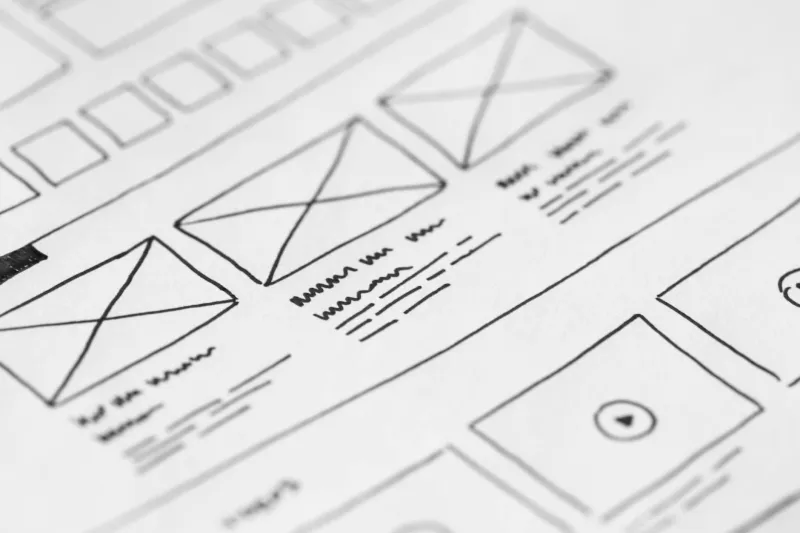
The same stock photography of diverse teams pointing at laptops. Identical colour palettes of millennial pink and startup blue. Page layouts so similar you could overlay them and find perfect alignment.
This isn't coincidence — it's the unintended consequence of an entire generation of founders making the same 'safe' design choices, creating a digital landscape where innovation thrives but visual identity withers.
The Template Trap That's Swallowing Startups
The numbers tell a startling story. In London's fintech sector alone, over 60% of new companies launch with websites using variations of the same three design templates. The wellness industry shows even more alarming uniformity — 73% of UK health-tech startups share virtually identical visual DNA.
"We spent months perfecting our product, then three days choosing a website template," admits James Richardson, founder of a Manchester-based PropTech startup. "I genuinely thought we'd picked something unique until a investor meeting where the person before us presented a website that looked identical to ours."
James discovered what many founders learn too late: template marketplaces don't create unique businesses — they create digital clones.
The Psychology of Playing It Safe
Why do intelligent entrepreneurs, capable of identifying genuine market gaps, consistently make copycat visual choices? The answer lies in startup psychology and the peculiar pressures of building a business from scratch.
When everything else feels uncertain — product-market fit, funding rounds, team building — choosing a website design that 'looks professional' provides psychological comfort. Founders see successful competitors using clean, minimal layouts and assume mimicking their visual approach will somehow transfer their success.
But this logic contains a fatal flaw: it assumes visual similarity creates competitive advantage rather than competitive disadvantage.
The Hidden Cost of Looking Like Everyone Else
Consider the customer journey in today's crowded marketplace. A potential client researches five fintech companies in a single afternoon, visiting websites that use identical stock photos of the same models, identical hero section layouts, and identical calls-to-action positioned in identical locations.
How do they differentiate? How do they remember which company offered what service? More importantly, how do they develop emotional connection with brands that feel interchangeable?
"We were losing deals to companies with inferior products but distinctive brands," explains Sarah Chen, whose London-based SaaS company underwent a complete visual overhaul after eighteen months of template-driven mediocrity. "Customers couldn't remember us because we looked like everyone else."
The Fintech Photocopy Problem
Nowhere is visual homogenisation more apparent than in UK fintech, where regulatory pressure creates additional incentive to appear 'trustworthy' through conventional design choices.
Visit ten fintech websites and you'll encounter:
- The same stock photo of a woman smiling at her phone
- Identical blue-and-white colour schemes
- Nearly identical headlines about 'revolutionising finance'
- The same three-column feature layouts
- Identical testimonial carousel designs
This visual uniformity doesn't create trust — it creates confusion. When every fintech looks identical, customers default to choosing based on price or features alone, commoditising entire sectors that could differentiate through brand experience.
The Wellness Industry's Identity Crisis
The UK wellness sector presents an even more extreme case study in visual conformity. Mental health apps, fitness platforms, and meditation services have converged on a design language so uniform it's become parody.
Pastel colour palettes. Sans-serif typography. Illustration styles featuring the same rounded, diverse characters. Even the messaging has homogenised: "Your wellness journey starts here" appears on roughly 40% of UK wellness startup websites.
"We launched with a website that looked exactly like Headspace, Calm, and a dozen smaller competitors," admits Tom Bradley, founder of a Bristol-based meditation app. "Our retention rates were terrible because users couldn't distinguish us from apps they'd already tried and abandoned."
When Different Becomes Profitable
The startups breaking through this visual noise understand that distinctive identity isn't vanity — it's strategy. They recognise that in oversaturated markets, memorability becomes a competitive advantage.
Take the example of Monzo, whose distinctive coral colour became so associated with their brand that competitors actively avoid similar shades. Or consider Deliveroo's teal branding, which helped them stand out in a sea of red food delivery services.
These companies didn't succeed despite their distinctive visual choices — they succeeded partly because of them.
The Professional Services Clone Army
Beyond tech startups, UK professional services firms have fallen into the same template trap. Legal tech companies, marketing agencies, and consultancies increasingly present identical digital faces to the world.
The standard formula: hero section with stock photo of a diverse team in a modern office, three-column service breakdown, client logo carousel, and testimonials featuring the same handful of satisfied-looking professionals.
"I realised we had a problem when a potential client confused us with a direct competitor during a pitch," says Rachel Morrison, founder of a Liverpool-based digital marketing agency. "Their website and ours were so similar, she'd genuinely mixed up our case studies."
The Revenue Reality of Visual Differentiation
Standing out visually isn't just about ego — it's about economics. Distinctive brands command premium pricing, enjoy higher customer retention, and require less marketing spend to achieve the same recognition levels.
A recent analysis of 150 UK startups revealed that companies with distinctive visual identities achieved 23% higher conversion rates and 31% better brand recall than their template-dependent competitors.
More tellingly, distinctively branded startups raised funding rounds 18% faster on average, suggesting that investors also struggle to differentiate between visually similar companies.
Building Brands That Break Through
The solution isn't necessarily expensive custom design — it's thoughtful differentiation. This means:
Colour choices that deliberately avoid sector conventions, creating immediate visual distinction in crowded marketplaces.
Photography strategies that move beyond generic stock imagery to show real team members, actual customers, or unique perspectives on common industry themes.
Content voice that reflects genuine company personality rather than industry-standard corporate speak.
Layout decisions that prioritise user experience over template convenience, even when this requires additional development investment.
The Competitive Advantage of Being Different
As template culture continues spreading across UK startups, the companies brave enough to look different enjoy increasingly powerful advantages. They become memorable by default, command attention in crowded markets, and build emotional connections that transcend feature comparisons.
The irony is profound: in trying to look professional and trustworthy through conventional design choices, thousands of innovative UK startups have made themselves invisible.
The future belongs to companies confident enough to look like themselves rather than everyone else. In a world of digital clones, originality isn't just refreshing — it's profitable.