Older Than Your Competitors' Grandparents: How Heritage UK Businesses Are Turning History Into Their Sharpest Digital Weapon
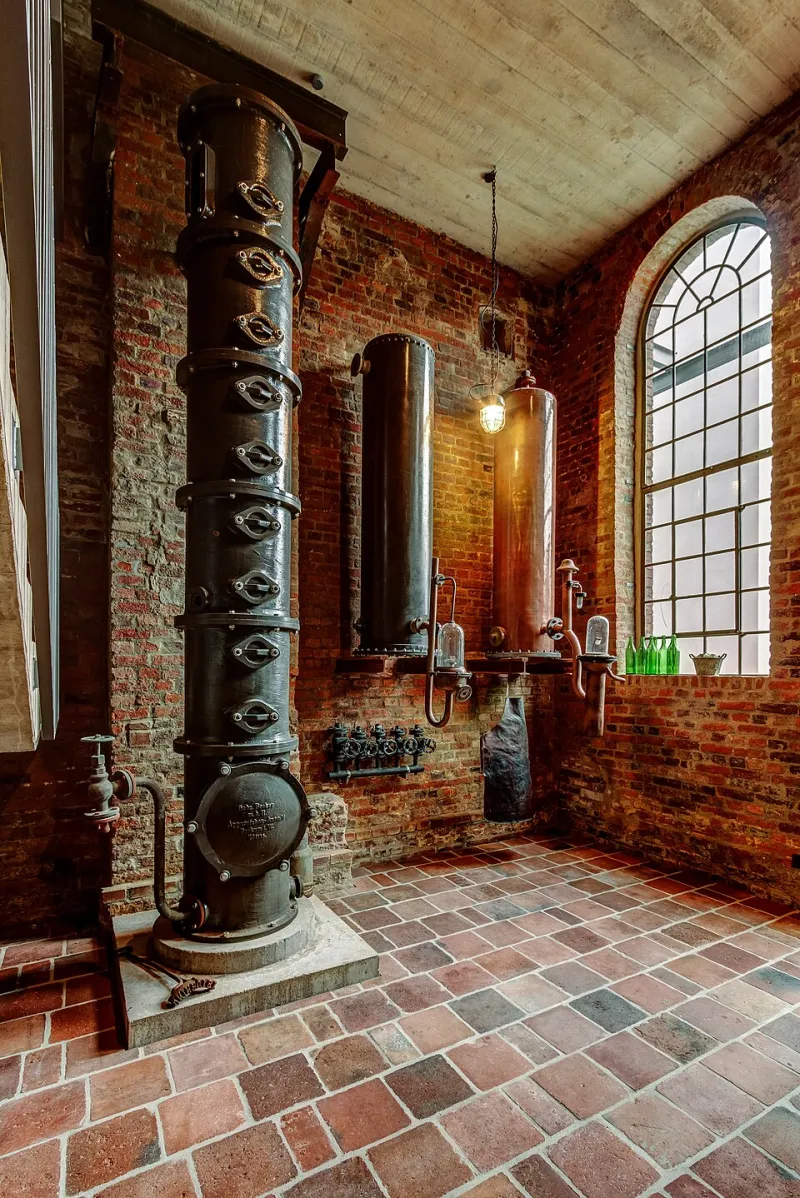
Photo: Dietmar Rabich, CC BY-SA 4.0, via Wikimedia Commons
The Accidental Advantage
There's a bakery in Shropshire that's been run by the same family since 1887. Four generations. Two world wars. The decimation of the high street. A pandemic. And yet, when they finally invested in a properly built website three years ago, something unexpected happened: the story of those 137 years didn't just add warmth to their digital presence. It drove sales. Measurably, significantly, and in ways that their competitors — newer, flashier, and considerably better funded — simply couldn't replicate.
They're not alone. Across the UK, multi-generational businesses are quietly discovering that the thing they'd always treated as background colour — the founding date above the door, the sepia photographs on the wall, the family name that's been on the van since before anyone can remember — is actually their most potent digital asset in an era of corporate sameness.
Why Authenticity Has Never Been More Commercially Valuable
The timing is not coincidental. Consumer trust in businesses has been eroding steadily for years. Research consistently shows that UK shoppers are increasingly sceptical of brand claims, allergic to performative values, and desperate for genuineness in a market saturated with identical promises and interchangeable aesthetics.
Into this environment, a family business with 80 years of trading history lands differently. Not because nostalgia is a shortcut to conversion — it isn't — but because genuine heritage, when communicated with craft and strategic intent, answers the fundamental question every potential customer is trying to resolve: can I trust these people?
A business that has served its community across multiple generations has an answer to that question that no amount of slick branding or five-star review aggregation can manufacture. The challenge — and it's a real one — is translating that answer into a digital experience that feels contemporary rather than dusty.
The Design Trap That Heritage Businesses Fall Into
Here's where many multi-generational businesses stumble. Recognising that their history has value, they lean into it in the most literal way possible: sepia tones, Victorian-style fonts, photographs of the original shopfront, a timeline stretching back to the founding year. The result feels like a museum exhibit rather than a living business, and it signals to visitors that the company's best days are behind it.
The craft is not in displaying heritage — it's in channelling it. There's an enormous difference between a website that says "we've been doing this since 1952" and one that makes you feel what that continuity means: the accumulated expertise, the generational relationships with suppliers, the deep understanding of a craft that only comes from decades of practice.
The best heritage web projects achieve this through a combination of visual storytelling, considered copywriting, and structural choices that put legacy in service of the present rather than dwelling in the past.
What the Best Heritage Websites Actually Do
Look at the digital work coming out of the UK's most thoughtful agencies for heritage clients and a clear set of principles emerges.
They use real photography, not stock. The images that resonate on heritage business websites are specific: the actual workshop, the real hands at work, the genuine faces of the people who've been doing this for thirty years. Stock photography — however well-chosen — immediately undermines the authenticity that makes heritage compelling. The investment in proper brand photography pays back many times over.
They make the story structural, not decorative. Rather than confining history to an "About Us" page that nobody reads, the best heritage websites weave legacy throughout the experience. Product pages reference the expertise behind them. Service descriptions invoke the depth of experience informing them. The founding story isn't a footnote — it's a thread running through the entire narrative.
They balance heritage with evidence of evolution. A business that's been trading since 1960 but has clearly kept pace with its industry is far more compelling than one that seems frozen in time. The most effective heritage websites show continuity and progress — demonstrating that the values and expertise are enduring even as the methods, products, and capabilities have grown.
They let customers speak to the legacy. Testimonials and case studies on heritage business websites carry particular weight when they reference longevity: "we've been buying from them for twenty years," or "my father used this company and so do I." This kind of social proof is uniquely available to long-established businesses and uniquely persuasive.
The Storytelling Techniques That Convert
Beyond structural choices, the copy on heritage business websites requires a particular touch. The temptation is to write history in the passive voice — the kind of dry, institutional prose that makes even genuinely remarkable stories feel lifeless. "The company was founded in 1934 by John Hargreaves..." Nobody's heart rate increases reading that sentence.
The businesses seeing the best results from heritage storytelling are those working with writers who understand how to make history feel immediate. Present tense. Specific detail. The kind of granular authenticity — the original recipe, the unchanged technique, the supplier relationship now in its third generation — that makes a reader stop scrolling and actually engage.
One Yorkshire textile manufacturer recently relaunched with copy that opened with the specific smell of the mill on a winter morning in 1923. Unusual? Absolutely. Memorable? Completely. And it set a tone of genuine, specific authenticity that carried through every page of the site — and contributed to a 34% increase in direct enquiries within six months of launch.
The Competitive Moat Nobody Can Buy
Perhaps the most strategically significant thing about heritage as a digital asset is that it's entirely uncopyable. A new competitor can match your pricing, replicate your service offering, and outspend you on paid advertising. They cannot manufacture 90 years of continuous trading. They cannot fabricate the trust that comes from serving three generations of the same family. They cannot buy the accumulated expertise that only time produces.
In a digital landscape where competitive differentiation is increasingly hard to achieve and even harder to maintain, this is genuinely rare. It's a moat that deepens with every passing year, and it costs nothing to acquire — only the skill and intention to deploy it properly.
Not Just for Niche Businesses
It's worth being clear that the heritage digital strategy isn't limited to artisan food producers and independent retailers, satisfying as those examples are. The same principles apply to fourth-generation accountancy practices, family-run logistics companies, multi-generational engineering firms, and century-old manufacturers. Anywhere that continuity, accumulated expertise, and deep-rooted community connection exist, there's a heritage story worth telling — and a digital opportunity worth seizing.
The UK has an extraordinary concentration of long-established family businesses. Many of them are currently presenting themselves online with all the personality of a corporate PowerPoint. The gap between where they are and where they could be isn't just a design opportunity — it's a commercial one.
History, it turns out, is the ultimate differentiator. You just have to know how to tell it.