The Editorial Calendar That Ate Itself: How UK Businesses Build Content Strategies They Were Never Going to Keep

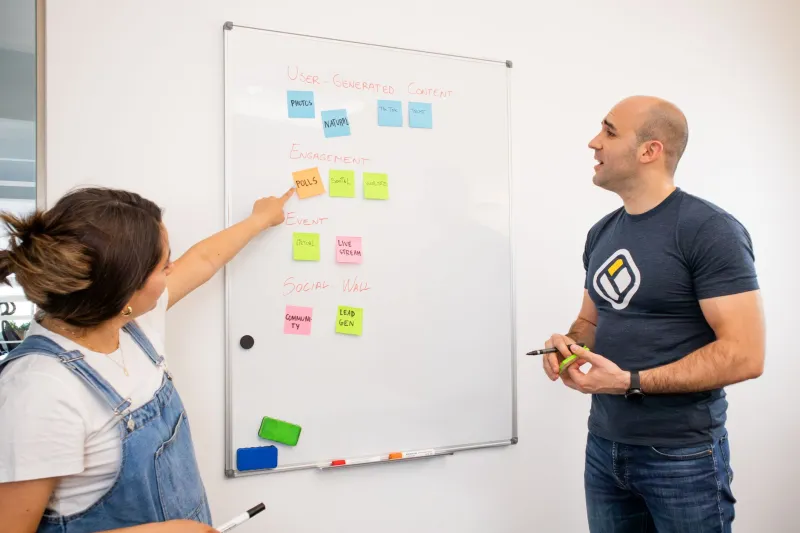
Somewhere around week three of a typical website project, there's a workshop. It's energetic. Someone draws a content matrix on a whiteboard. Someone else talks about 'thought leadership pillars.' There's genuine excitement about the blog that's going to publish twice a week, the LinkedIn series that's going to run every Thursday, the quarterly white papers that are going to position the business as the go-to voice in its sector.
Fast forward six months after launch. The blog has two posts, both dated to the week the site went live. The LinkedIn series ran for three weeks before the person responsible went on holiday and never restarted it. The white papers exist as a folder of half-finished bullet points on someone's desktop.
This is not a failure of ambition. It's a failure of planning — and it's one of the most common and most expensive patterns in UK digital marketing.
The Workshop High and the Monday Morning Reality
Content strategy workshops are, by design, optimistic environments. You're in a room (or on a Zoom call) with your agency, you're talking about possibilities, and everything feels achievable. Of course you can publish two articles a week. Of course someone will manage the social channels. Of course the MD will record a monthly video.
The problem is that workshops happen outside of normal business time. Nobody in that room is also fielding client calls, managing staff issues, chasing invoices, or dealing with the eighteen other things that constitute running a company in the real world. The content plan is built in a bubble and then dropped into an environment that has absolutely no structural capacity to support it.
The agency, for their part, often knows this. Experienced digital teams can spot an over-ambitious content brief from a mile away. But there's a commercial tension: telling a client their plan is unrealistic risks losing the work or damaging the relationship. So the plan gets built, the client signs off, and everyone quietly hopes it'll work out.
It usually doesn't.
The Real Cost of an Abandoned Content Strategy
An empty blog isn't just a missed opportunity. It actively damages credibility in ways that many businesses don't fully appreciate.
A 'Latest News' section with entries from 2022 tells every visitor that the business hasn't been paying attention to its own website. A resources page full of 'coming soon' placeholders signals that the company overpromised and underdelivered — and if they do that on their own site, what does that suggest about how they treat client projects?
There's an SEO dimension too. Google's algorithms reward consistent, quality content. A site that published eight articles in its launch month and then went silent is not accumulating the kind of authority that drives organic traffic. The initial investment in content — often a meaningful chunk of the project budget — delivers a return for a few weeks and then flatlines.
For many UK businesses, particularly in professional services and B2B sectors where content marketing is the primary lead generation channel, this flatline is catastrophic. The pipeline that was supposed to be fed by inbound content never materialises. Paid acquisition fills the gap at significantly higher cost. The content strategy, designed to reduce marketing spend over time, ends up increasing it.
A Case Study in Getting It Wrong (and Then Right)
A regional law firm in Yorkshire commissioned a full digital overhaul a couple of years ago. The content strategy was genuinely impressive: sector-specific guides, monthly case commentary, a quarterly employment law update, and a partner blog that would showcase individual expertise.
Eighteen months later, the site had published four articles. The partners — who were the intended authors — had no time to write. The marketing manager who was supposed to coordinate the calendar left the firm eight months after launch. Nobody had a clear owner for the content programme, so nothing happened.
The firm came back to their agency for help. What followed was a reset that, frankly, should have happened at the start. Instead of a comprehensive content strategy, they built a minimum viable one: one article per month, written by the agency based on a 30-minute interview with a partner, published consistently. No social series. No white papers. Just twelve articles a year that actually existed.
Within six months, organic traffic had increased by 34%. Three of the articles had generated direct enquiries. The partners were engaged because the burden on them was minimal. Sustainable had beaten ambitious by a significant margin.
What Realistic Scoping Actually Looks Like
The fix isn't to abandon content strategy. It's to build strategies that match the actual capacity of the organisations they're designed for.
That means asking different questions at the brief stage. Not 'what content could you create?' but 'how many hours per month can someone genuinely dedicate to content, without it competing with billable work or core responsibilities?' Not 'what topics are relevant to your audience?' but 'what topics do you have genuine expertise in that you could discuss without significant research?'
For most UK SMEs, the honest answer is: one piece of content per month, managed with light-touch agency support. That's not a failure. That's a programme that gets executed, compounds over time, and actually delivers results.
For larger businesses with dedicated marketing teams, the capacity is higher — but even here, the gap between planned and executed content is usually substantial. A quarterly audit of what's actually being published versus what was planned is a useful reality check that most businesses never conduct.
The Agency's Responsibility
There's a broader point here about what good creative partnership looks like. An agency that builds a content strategy it knows a client can't execute isn't serving that client — it's serving the invoice. The honest, harder conversation — 'we think you're overestimating your capacity, and here's what we'd recommend instead' — is the one that actually builds long-term relationships.
The best digital agencies in the UK are increasingly building content sustainability into their discovery process. They're asking about internal resource before they propose output levels. They're building maintenance plans alongside launch plans. They're treating the post-launch period as part of the project, not an afterthought.
Because a content strategy that gets executed at 50% of its planned ambition is infinitely more valuable than one that gets executed at 0%. The editorial calendar that actually runs — even quietly, even modestly — is the one that builds authority, generates leads, and justifies the investment.
The one that lives in Google Drive and never gets touched is just a very expensive document.