Building for a Buyer Who's Moved On: The Outdated Website Personas Costing UK Businesses Dearly

Building for a Buyer Who's Moved On: The Outdated Website Personas Costing UK Businesses Dearly
Imagine hiring a salesperson and then discovering they'd been trained entirely on buyer behaviour from 2018. They'd use the wrong language, appeal to the wrong motivations, and probably quote the wrong price points. You'd fix it immediately.
Yet thousands of UK businesses are running exactly this scenario every single day — through their websites.
The website that was built to serve a confident, pre-pandemic consumer with disposable income and straightforward priorities is now attempting to convert a buyer who is exhausted, value-conscious, deeply sceptical, and — increasingly — AI-literate enough to smell vague marketing copy from a mile away.
Something has to give.
The Customer Who No Longer Shows Up
In the years before 2020, a particular type of buyer dominated UK B2C and B2B digital journeys. They were broadly optimistic. They responded well to aspiration-led messaging. They were willing to trade convenience for experience. And they had, on average, more financial headroom to make purchasing decisions without agonising over them.
That buyer still exists — but they now share the market with a substantially different demographic reality. The cost-of-living crisis has fundamentally recalibrated how UK consumers weigh value. The pandemic reshuffled priorities in ways that are still rippling through purchasing decisions. And the explosion of AI tools has made buyers more research-literate, more impatient with waffle, and more likely to compare you against ten competitors before they've finished their morning coffee.
If your website was designed before any of this happened, it may be speaking fluently to someone who simply isn't there anymore.
The Audit Nobody Wants to Run
Here's a practical starting point. Pull up your website and ask yourself three honest questions.
First: who did we think we were building this for when it launched? Not the official brief — the actual assumptions baked into the messaging. Were you targeting aspirational middle-income households? Optimistic startup founders? Procurement managers with generous budgets?
Second: who is actually converting right now? Look at your CRM data, your sales call notes, your customer support tickets. What are real buyers asking about? What objections come up repeatedly? What language do they use to describe their problems?
Third: is there a gap between those two pictures?
For most UK businesses who launched or last significantly updated their websites before 2022, the gap is substantial — and it's actively costing them.
A Case Study in Persona Drift
Consider a mid-sized interior design studio based in the Home Counties that CreativWeb worked with last year. Their website had been built in 2019 around a client profile of affluent homeowners undertaking full property renovations — high-ticket, low-volume, aspirational.
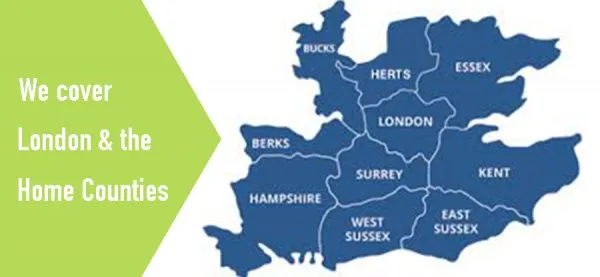 Photo: Home Counties, via www.evacuationchairlondon.co.uk
By 2024, their actual enquiry base had shifted considerably. Yes, full renovation clients still existed. But a growing proportion of their real business was coming from homeowners doing targeted room refreshes, buy-to-let landlords improving rental yields, and young couples who'd bought older properties and needed phased design support over time.
The website was entirely silent on all of this. It spoke exclusively to the grand transformation project. The language was elevated, the imagery showed only sweeping before-and-afters, and the pricing page — such as it was — positioned the studio firmly in premium-only territory.
The result? High bounce rates from the very segments that were actually converting in the real world. Enquiries that came in were often misaligned with capacity, while genuinely interested prospects self-disqualified before making contact.
A targeted content and design restructure — adding a project types section, introducing tiered entry points, and rewriting copy to acknowledge the realities of 2024 budgets — increased qualified enquiries by 55% within four months.
Messaging That's Aged Badly
It's not just about audience demographics. It's about the emotional and cultural context your messaging assumes.
Copy written in 2019 often carries a certain breezy confidence — an assumption that the reader has bandwidth, optimism, and patience. Today's buyer frequently has none of those things in abundance. They want to understand quickly whether you solve their specific problem. They want evidence you've done it before. And they want to feel that you understand the pressures they're operating under, rather than breezily ignoring them.
This doesn't mean websites should become gloomy or defensive. It means the tone needs recalibrating. Acknowledging that budgets are tighter, timelines are more pressured, and decisions carry more weight isn't pessimism — it's empathy. And empathy converts.
A Framework for Realignment
If you suspect your website is haunted by a customer who's moved on, here's a practical framework for bringing it back to the present.
Step one: customer interviews. Talk to five or six recent buyers. Ask them what nearly stopped them from buying. Ask what they were most worried about before they committed. Ask what they wish they'd known sooner. The answers will be illuminating.
Step two: objection mapping. List every hesitation your sales team encounters. Now check your website. Does it address any of them directly? If not, that's a structural problem.
Step three: language mirroring. Use the actual words your customers use to describe their problems — not the industry terminology you prefer. If buyers keep saying 'we were worried about hidden costs,' your website should use the phrase 'no hidden costs' rather than the more polished but less resonant 'transparent pricing structure.'
Step four: persona stress-testing. Take your existing buyer personas and run them against current UK economic and social context. Would this person, in 2025, still respond to this message? If the honest answer is 'probably not,' it's time to rebuild.
The Cost of Standing Still
Websites feel permanent in a way that social media posts don't. They take effort to build and effort to change, and there's a natural human tendency to treat them as finished objects rather than living documents.
But a website that's out of step with its audience isn't just ineffective — it's actively misleading. It tells the market you're not paying attention. And in a competitive digital landscape, that's not a message any UK business can afford to send.
The customer has evolved. The question is whether your website has kept up.