Bland by Design: Why Playing It Safe Online Is the Riskiest Move UK Businesses Can Make

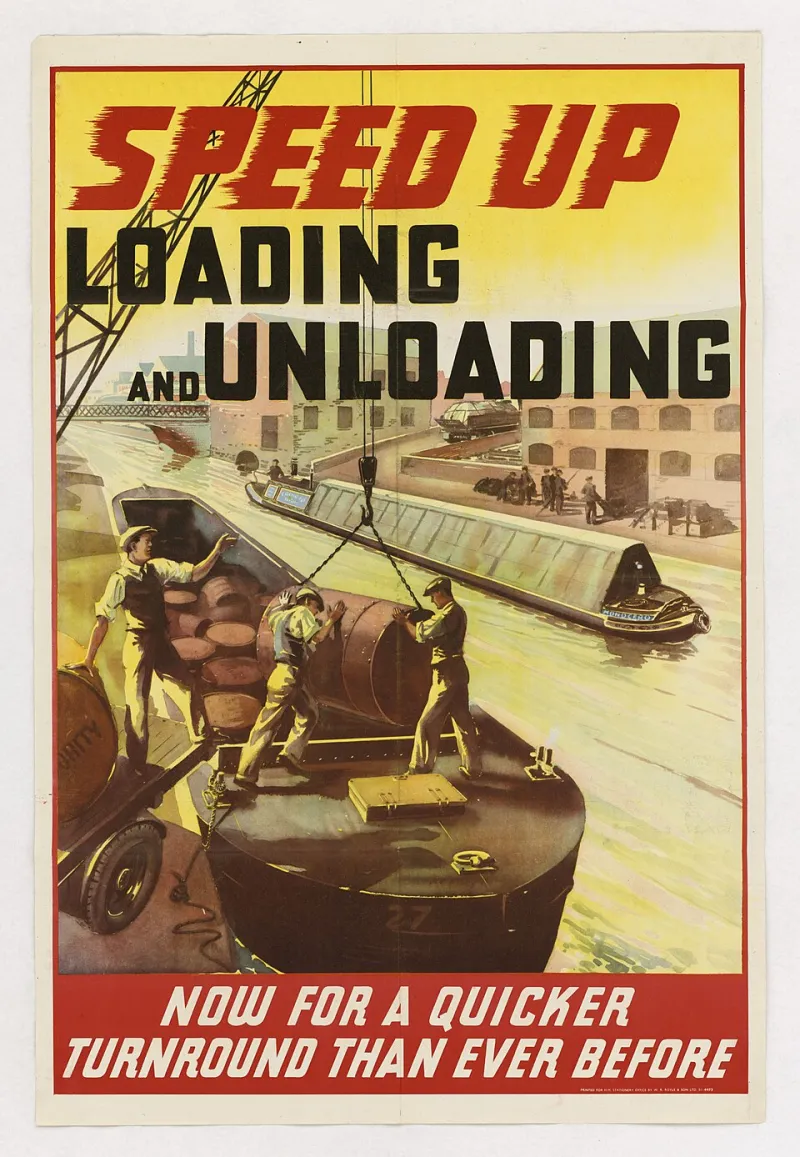
Photo: creative website copywriting brand personality UK digital marketing team, via resources.finalsite.net
Picture the scene. A prospective customer has fifteen browser tabs open, all solicitors, all accountants, all web agencies, all plumbers — whatever service they need. They're scanning. They're comparing. They're looking for a reason to choose one over the other fourteen.
Now ask yourself: if those fifteen websites all say "delivering excellence through client-focused solutions" and "our experienced team is committed to your success," what exactly is the customer supposed to use as a differentiator? Price, probably. And price is a race to the bottom that nobody actually wins.
This is the quiet crisis of the British web. Not a technical one — not slow load times or broken mobile layouts, though those matter too. This is a personality crisis. A widespread, industry-spanning epidemic of businesses so determined to appear 'professional' that they've accidentally made themselves completely forgettable.
How 'Professional' Became a Problem
The instinct is understandable. Nobody wants to look amateurish. Nobody wants a website that reads like it was written by someone who skipped the spell-check. When businesses think about what 'professional' looks like online, they reach for the visual and linguistic cues they associate with credibility: neutral colours, formal language, stock photography of smiling people in offices, copy that could apply to any business in their sector.
The trouble is that everyone else is doing exactly the same thing. The result isn't a professional-looking industry — it's a sea of indistinguishable businesses, all broadcasting the same signals, all hoping customers will somehow detect their individual superiority through the uniform corporate fog.
And customers, increasingly, are not playing along. They're scrolling past the bland, the generic, the committee-approved. They're stopping for the real.
The Evidence Is Stacking Up
This isn't just an aesthetic observation. There's a growing body of evidence that personality-led digital strategy outperforms its corporate counterpart in measurable ways.
A study by Sprout Social found that 86% of consumers said authenticity matters when deciding which brands to support. Separate research from Edelman's Trust Barometer has consistently shown that brands perceived as human, honest, and direct command greater loyalty and advocacy than those perceived as polished but impersonal.
In the UK specifically, we've seen this play out in sector after sector. The accountancy firms that write about tax in plain English — sometimes with actual humour about how much everyone hates self-assessment — are generating more organic engagement and better qualified enquiries than competitors whose websites require a legal dictionary to decode.
The tradespeople who write their own website copy, in their own voice, complete with regional idiom and the occasional self-deprecating aside, are converting better than those who paid a copywriter to sand all the personality away into something that sounds vaguely corporate.
A Few Examples Worth Looking At
Consider what's happened in the UK craft beer and independent food sector. Brands like BrewDog built their early momentum almost entirely on voice — irreverent, direct, occasionally provocative. Whatever you think of them now, the early digital strategy was a masterclass in using personality to cut through a crowded market. Their website copy didn't sound like a brewery. It sounded like a group of people who were genuinely angry about bad beer and wanted you to be angry about it too. That specificity was magnetic.
Or look at Monzo, who rewrote the rulebook on how a financial services brand talks to customers online. In an industry defined by its impenetrable jargon and institutional distance, Monzo's website, app copy, and blog sounded like a friend explaining your finances. The result wasn't just good brand sentiment — it was explosive growth in a sector where switching barriers are enormous.
Neither of these is a small artisan business. The lesson scales in both directions.
At the SME level, we've worked with a Manchester-based HR consultancy whose previous website was indistinguishable from any of its fifty nearest competitors. Formal language, stock photography, a mission statement that could have been generated by algorithm. Their new site led with their actual opinions about HR — the things businesses get catastrophically wrong, the legislation that trips everyone up, the honest truth about what good people management actually requires. It was opinionated. It was specific. It was, in places, quite funny.
Enquiry quality improved dramatically. Not because more people were finding them — traffic was roughly similar — but because the people who did arrive were pre-qualified. They'd already encountered the firm's actual perspective and decided they liked it. The sales conversation started from a completely different place.
The Fear That's Keeping Businesses Bland
So why don't more UK businesses do this? The answer, honestly, is fear. Fear of putting off potential customers. Fear of seeming unprofessional. Fear of saying something that someone, somewhere, might disagree with.
This fear is not entirely irrational. A personality-led website does filter more aggressively than a bland one. Some visitors will encounter your voice and decide it's not for them. But this is actually a feature, not a bug. The customers you filter out with a distinctive voice were almost certainly going to be difficult, price-sensitive, or misaligned with your business anyway. The customers you attract are self-selected for fit. They chose you precisely because of who you are.
The alternative — the blandness strategy — doesn't actually avoid the filtering problem. It just does the filtering at the price negotiation stage instead of the discovery stage, and by then you've already invested time and resource in the conversation.
What Personality Actually Means in Practice
It's worth being clear about what we're not advocating here. Personality on a website doesn't mean being zany, writing everything in lower case, or inserting memes into your service pages. It doesn't mean abandoning clarity for cleverness. It doesn't mean alienating half your potential market with political statements.
What it means, at its simplest, is sounding like a real business run by real people who have genuine expertise and genuine opinions. It means writing copy that could only have been written by you — not because it's eccentric, but because it reflects your actual perspective, your actual experience, your actual way of solving problems.
It means the About page that tells a real story rather than a corporate timeline. The service page that explains not just what you do but why you do it that way. The blog that says something genuinely useful rather than recycling the same industry talking points everyone else is publishing.
None of this is complicated. Most of it doesn't require a significant budget. What it requires is the willingness to stop hiding behind professionalism as an excuse for saying nothing.
The Competitive Advantage Nobody Is Taking
Here's the strange thing about the personality gap in UK web design: it's enormous, it's well-documented, and almost nobody is exploiting it. The market is full of businesses that know their website sounds like everyone else's and haven't done anything about it.
That's not a problem. That's an opportunity. The business that decides to actually sound like itself online — to write with conviction, to let its genuine expertise and character come through — isn't just improving its website. It's stepping into a competitive space that most of its competitors have vacated entirely.
Bland is not safe. Bland is the riskiest thing you can be.