Address Discrimination: How Your Business Postcode Is Quietly Deciding Contracts Before You've Said a Word

Address Discrimination: How Your Business Postcode Is Quietly Deciding Contracts Before You've Said a Word
There's an uncomfortable truth sitting inside the inboxes of businesses across Wolverhampton, Kirkcaldy, and Grimsby right now. Prospective clients are Googling them, landing on their websites, clocking the address, and quietly clicking away — not because the service is poor, but because the postcode doesn't feel right.
Call it postcode prejudice. Call it geographic snobbery. Whatever you name it, the effect is the same: UK businesses operating outside London, Manchester, or Edinburgh's fashionable quarters are losing contracts they'd almost certainly win if a client ever actually picked up the phone.
The question is — what can a well-crafted digital presence do about it?
The Invisible Hierarchy Nobody Admits to Having
Ask any procurement manager whether they'd reject a supplier based on their address and they'll almost certainly say no. But behavioural data tells a different story. Research into B2B purchasing decisions consistently shows that perceived credibility is formed within seconds of a website visit — and location signals, however subconsciously absorbed, feed directly into that snap judgement.
A solicitor's firm on a Stoke-on-Trent industrial estate and a solicitor's firm on Bristol's Clifton Down might offer identical quality. But if one website features a stock photo of a grey business park and the other shows a Georgian terrace bathed in afternoon light, the conversion rates will diverge sharply.
This isn't purely about vanity. It's about the mental shortcuts buyers use when they're time-poor and risk-averse — which, in post-pandemic Britain, is essentially everyone.
The Photography Problem Nobody's Talking About
One of the fastest ways a business accidentally broadcasts its geographic 'status' is through imagery. Specifically, through the absence of intentional photography.
Companies in perceived prestige locations tend to invest in professional location photography because the backdrop sells itself. A Mayfair consultancy will plaster its Georgian windows across every page. A consultancy in Telford, working from a functional but unremarkable office unit, often defaults to generic stock imagery — which paradoxically signals less confidence than no imagery at all.
The fix isn't to pretend you're somewhere you're not. It's to reframe what your location means. A manufacturing business in the East Midlands has extraordinary visual assets available to it — production floors, skilled craftspeople at work, precision machinery. These images communicate capability, scale, and authenticity in ways a glass-and-steel city office never could.
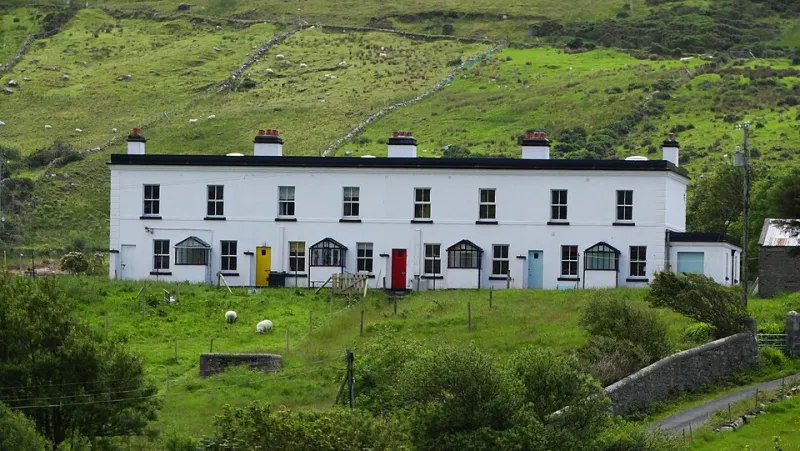
Redditch-based engineering firm Rimstock Wheels understood this intuitively. Their digital presence leans hard into the visual drama of alloy manufacturing — heat, metal, precision — and positions their Midlands roots as a badge of industrial heritage rather than a geographical apology. The result is a brand that feels premium without pretending to be something it isn't.
 Photo: Rimstock Wheels, via www.teamdynamics.cz
Strategic Positioning: Rewriting the Narrative
Beyond photography, the language a website uses shapes geographic perception more than most business owners realise.
There's a meaningful difference between a website that says 'based in Dundee' and one that says 'serving clients across the UK and Europe from our Scottish base.' The first positions location as a fact. The second positions it as a choice — implying scale, reach, and intentionality.
This isn't spin. It's simply understanding that copy creates context. A Swansea-based digital agency that lists FTSE 250 clients prominently on its homepage isn't hiding its postcode — it's making that postcode irrelevant to the only question that matters: can they deliver?
CreativWeb has worked with businesses across the UK who've undergone this kind of narrative repositioning and seen tangible results. One West Yorkshire manufacturer, previously invisible to southern buyers, restructured their website around client outcomes and sector expertise rather than company background. Inbound enquiries from London-based procurement teams increased by 40% within six months — without a single change to their address.
The Trust Architecture That Levels the Field
For businesses in less prestigious postcodes, trust signals need to work harder. This means being deliberate about every credibility cue on the page.
Case studies should feature named clients and specific outcomes — not vague testimonials. Accreditations, industry memberships, and awards should be prominently displayed rather than buried in a footer. Team pages should feel warm and human, not corporate and distant. And if you've worked with recognisable brands, those logos belong on your homepage, full stop.
The goal is to make geographic location a footnote rather than a headline. When a visitor lands on your site and immediately sees evidence of serious work, serious clients, and serious expertise, the postcode becomes background noise.
The Bigger Picture
There's something slightly absurd about the fact that in 2025 — with remote working normalised, digital delivery the default, and physical location increasingly irrelevant to service quality — businesses are still losing work because of where their office happens to be.
But the bias is real, and pretending otherwise doesn't help anyone. What does help is building a digital presence so compelling, so credible, and so clearly focused on client outcomes that the postcode question simply never arises.
For businesses in Barnsley, Bangor, or Basingstoke, the playing field isn't level yet. But with the right web design strategy, it can be a great deal flatter than it currently looks.
Your address is a fact. Your digital presence is a choice. Make it count.